Case Studies


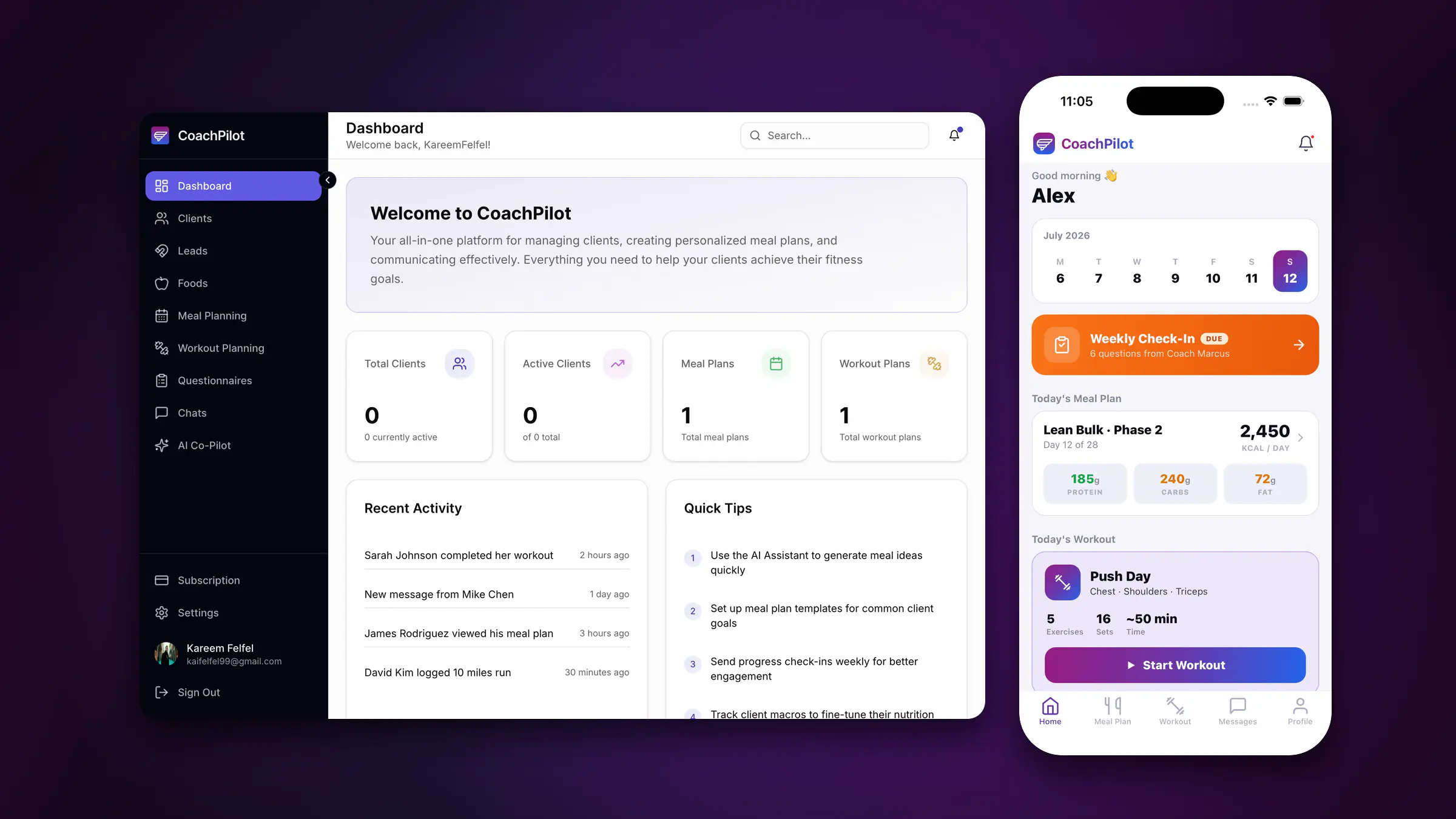
Fitness app development looks simple from the outside: log workouts, track meals, show progress. The hard part is getting people to open the app every day, and, if you're building for coaches or personal trainers, making their work faster instead of adding another tool to manage. We built CoachPilot, an AI coaching platform for fitness and nutrition coaches, so this guide draws on real decisions from that build.
| Type | Who pays | Core features |
|---|---|---|
| Consumer workout or nutrition app | Individual users (subscription) | Plans, tracking, progress, reminders |
| Coaching platform (B2B) | Coaches and trainers | Client management, plan building, chat, check-ins |
| Studio or gym app | The gym (members use it free) | Class booking, memberships, payments |
| Community or challenge app | Users or sponsors | Leaderboards, groups, challenges |
Trainers want to spend less time on admin and more time coaching. The features that win them over cut repetitive work: generating a first-draft plan, reusing templates across clients, automatic check-in reminders and one inbox for client messages. CoachPilot's positioning, "built for coaches, by coaches," reflects that: every feature is judged by whether it saves the coach time.
Subscriptions are the norm. CoachPilot uses Free (up to 2 clients), Pro (up to 50) and Ultimate (unlimited plus full AI) tiers, which lets coaches start free and upgrade as their business grows. Note that if you sell digital subscriptions inside an iOS or Android consumer app, store billing rules usually apply; B2B tools sold on the web are typically billed directly.
| Feature | Effect on cost |
|---|---|
| Web dashboard plus mobile app | Two interfaces, more cost than mobile alone |
| Exercise and food libraries | Content and data work on top of development |
| AI plan generation | Model integration, guardrails, per-user running cost |
| Real-time chat | Infrastructure and testing |
| Wearable integrations | Each integration adds setup and edge cases |
It depends on whether you need web and mobile, AI features and real-time chat. Our app cost guide explains the drivers, and our Blueprint gives you a fixed price.
When it removes real work, yes: drafting plans, summarizing check-ins or swapping foods. AI for its own sake adds cost without adding retention.
Usually not. Integrations with health platforms and wearables are good version-two features once users are engaged.
Building a fitness or coaching app? Book a free 30-minute fit call.
Book a free fit call

Book a free 30-minute call to talk through your project. No cost, no sales pitch, just an honest look at how Synaptix can build it.