Case Studies


Choosing an AI app development company in 2026 is harder than it looks, because almost every agency now claims AI expertise. The difference between a demo and a product is whether the AI does a specific, valuable job reliably, inside a workflow users already have, at a cost that makes sense per user. That's what we focus on. This guide covers the main kinds of AI features, how to build an AI app that holds up in production, and what AI integration services should include.
| Feature | What it does | Example use |
|---|---|---|
| AI assistant | A chat interface that takes actions, not just answers | Generate a plan, summarize a client's week |
| RAG system | Answers grounded in your own documents and data | Support bots, internal knowledge search |
| AI agent | Uses tools and APIs to complete multi-step tasks | Create, check and save a meal plan |
| Automation | AI inside a workflow, triggered by events | Classify inbound requests, draft replies |
| Generation | Creates structured content from inputs | Workout programs, product descriptions |
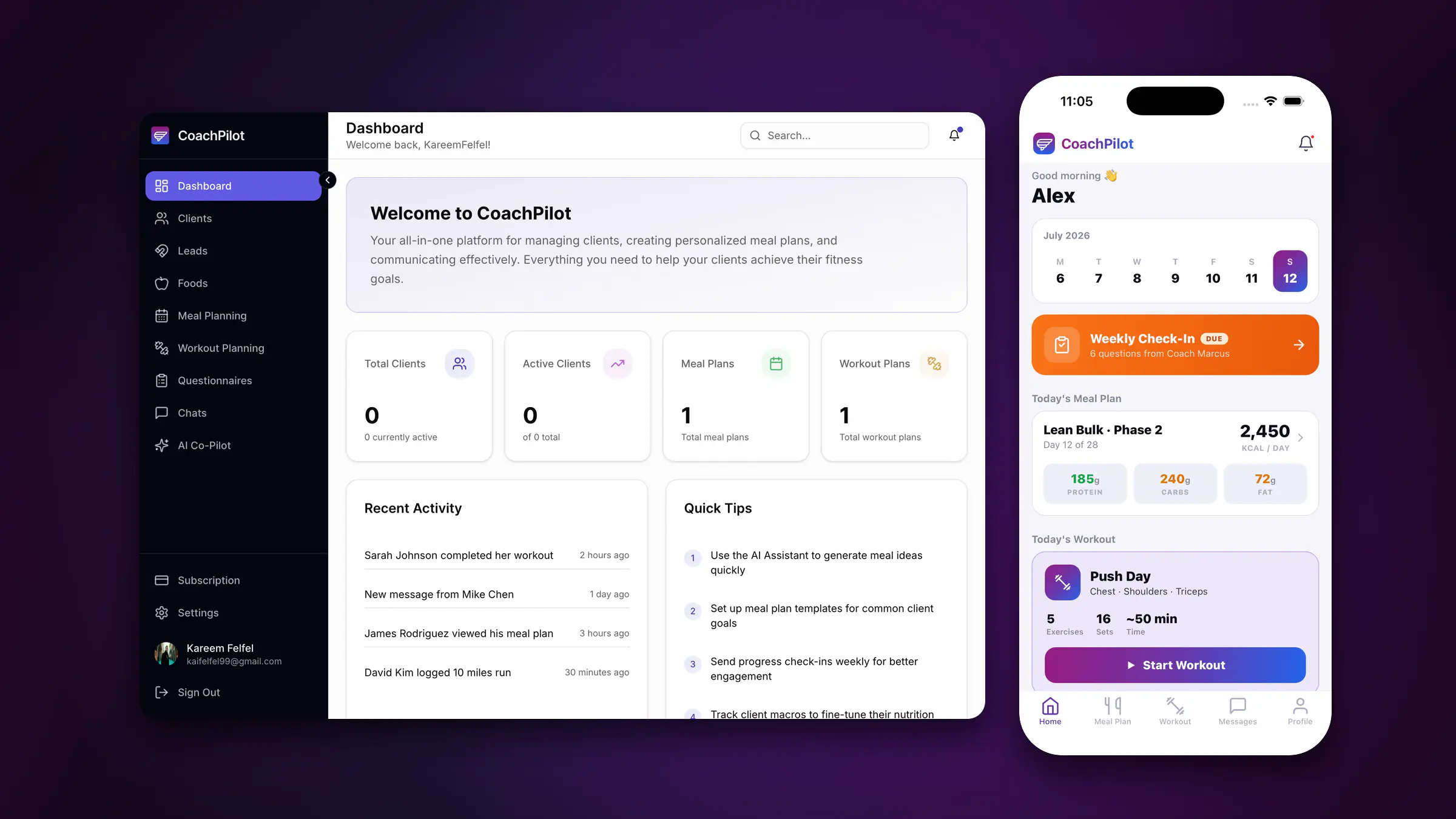
CoachPilot is a coaching platform for online fitness and nutrition coaches. Its AI Co-Pilot generates meal plans, workout programs and client check-in summaries conversationally. Rather than a chatbot bolted on afterward, it's built with the OpenAI SDK and dedicated agent tools (for example, creating a meal plan, proposing one, and calculating its macros) that act on the platform's real data: the coach's clients, the food library and the exercise catalog. The coach stays in control and edits the result, and the AI does the time-consuming first draft.
You don't need a new app to benefit from AI. AI integration services add capabilities to the tools and data you already have: a support assistant trained on your help docs, automatic classification of inbound requests, document processing, or an internal search across your files. The questions are the same as for a new build: which task, which data, how you'll check the output, and what it costs to run.
AI features add a variable cost that most apps don't have: model usage, which grows with every request. That's why we plan AI usage into the pricing and profitability section of every Blueprint, for example reserving the most AI-heavy features for higher tiers. CoachPilot follows this pattern, with full AI capability on its top Ultimate tier.
An AI agent is a model that can call tools, such as reading a client's history or saving a plan, to complete a multi-step task. Agents are powerful when the task follows a clear goal with checkable steps. They're risky when actions are irreversible or mistakes are expensive. In those cases, we keep the agent proposing and a human approving, which is the pattern CoachPilot uses: the AI drafts, the coach decides.
| Good fit for AI | Poor fit for AI |
|---|---|
| Drafting plans, summaries and replies for review | Final decisions with legal or medical consequences |
| Searching and answering from your own documents | Questions where no reliable data exists |
| Classifying and routing requests | Tasks that need guaranteed exact results every time |
Rarely. Most products get better results faster by using hosted models with good prompts, tools and their own data.
Usually yes, through APIs, as long as we can access the relevant data and define a clear task for the AI to do.
You can't eliminate them entirely, so design for them: ground outputs in your data, validate results, limit what the AI can do automatically, and keep a human reviewing high-stakes outputs.
Have an AI feature or AI app in mind? Book a free 30-minute fit call and we'll tell you whether it's worth building.
Book a free fit call

Book a free 30-minute call to talk through your project. No cost, no sales pitch, just an honest look at how Synaptix can build it.