Case Studies


SaaS app development is different from building a one-off app because you're building for many customers at once, each paying a subscription and expecting the product to keep getting better. That adds pieces a simple app doesn't need: self-serve signup, subscription billing, plan limits, team accounts and a way to support customers. The good news is that a SaaS MVP can leave out a lot more than most founders think. Here's how to build a SaaS product that gets to paying customers quickly.
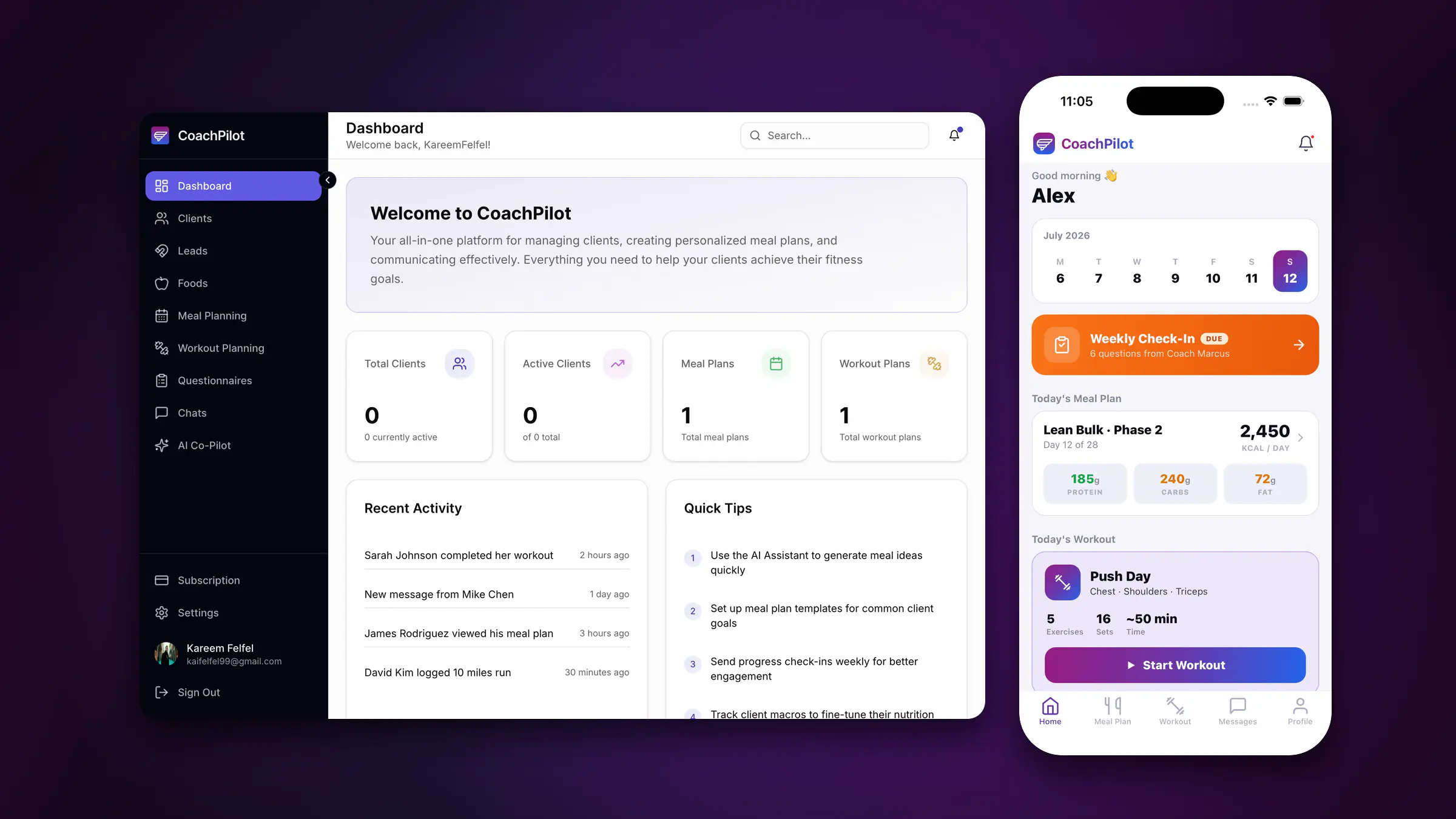
CoachPilot is a B2B SaaS for online fitness coaches that we built: a Next.js coach dashboard plus a React Native client app, with AI meal and workout planning, real-time chat and recurring check-ins. Its tiers (Free for up to 2 clients, Pro for up to 50, Ultimate for unlimited clients and full AI) are enforced in the product and billed through Paddle. Because client limits define the plans, they had to be designed into the data model from the start, which is exactly the kind of decision we make in the Blueprint rather than mid-build.
| Layer | Typical choice | Why |
|---|---|---|
| Web app | Next.js, React, TypeScript | Fast, SEO-friendly, huge hiring pool |
| Backend | Node.js, Supabase or PostgreSQL | Reliable, managed auth and data |
| Billing | Stripe or Paddle | Subscriptions, tax handling, invoices |
| Real-time | Supabase realtime or Socket.io | Chat, notifications, live updates |
| AI | OpenAI and similar hosted models | Proven capability without training costs |
| Mobile (if needed) | React Native with Expo | One codebase for iOS and Android |
A SaaS serves many customer accounts from one system, and each customer must only ever see its own data. Getting this right from the start is one of the most important architecture decisions in SaaS app development, because retrofitting it later is painful. Modern databases like PostgreSQL (and Supabase on top of it) support row-level security rules that enforce isolation at the database level, which is a strong safety net beneath the application code.
These decisions are part of the pricing and profitability plan in our Blueprint, because they change how the product is built, not just how it's sold.
It depends on the core workflow and integrations. Our web app development cost guide covers what drives SaaS costs, and our Blueprint gives you a fixed price.
A free tier can drive adoption when the product spreads by use (like CoachPilot's free plan for up to 2 clients). If your buyers are businesses with a clear budget, a free trial may convert better.
Both work well. Paddle acts as merchant of record and handles sales tax for you; Stripe gives more flexibility and control. The choice depends on where you sell and how much tax handling you want to offload.
Building a SaaS? Get the MVP scope, pricing plan and fixed build price in 7 business days.
Start your blueprint

Book a free 30-minute call to talk through your project. No cost, no sales pitch, just an honest look at how Synaptix can build it.