
Building Revenue-Generating Apps

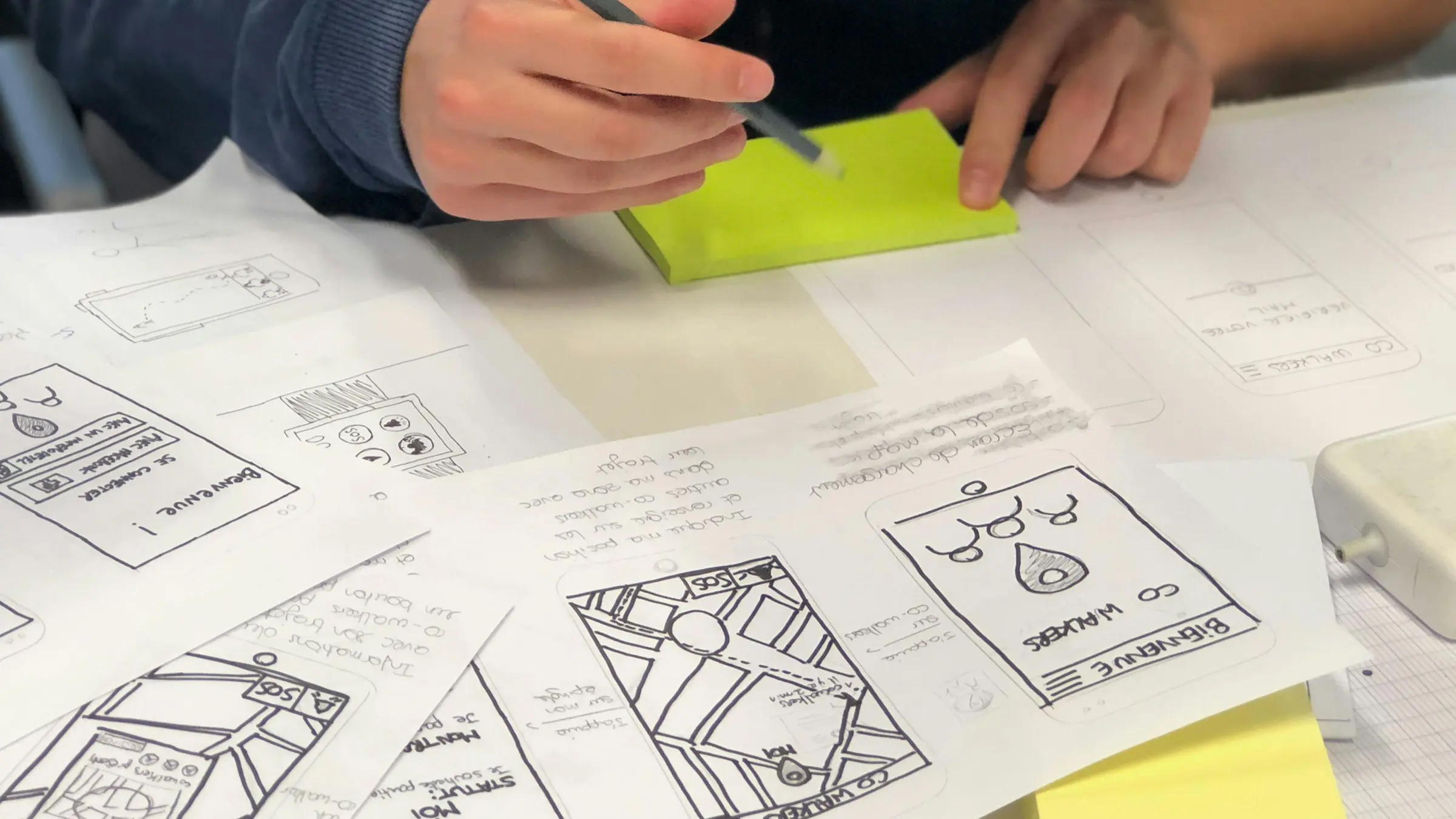
MVP vs prototype is one of the most confused comparisons in app development, and the confusion is expensive. Founders pay for a polished prototype when they needed real users, or try to launch a technical experiment as if it were a product. The simplest way to keep them apart: a proof of concept asks "can it be built?", a prototype asks "do people understand it?", and an MVP asks "will people use it and pay for it?". Each answers a different risk.
| Proof of concept (PoC) | Prototype | MVP | |
|---|---|---|---|
| Question it answers | Is this technically possible? | Does the flow make sense to users? | Will real users use it and pay? |
| Who sees it | Internal team | Test users, investors | Real customers |
| Is it working software? | Partly, often one piece | Usually not (clickable designs) | Yes, production-ready |
| Typical effort | Days to a few weeks | Days to a few weeks | Weeks to a couple of months |
| What you get | A yes or no on feasibility | Feedback on usability | Usage data and revenue |
A proof of concept tests one technical risk in isolation. Can the AI model generate a usable meal plan from a coach's notes? Can GPS check-in reliably confirm a player is at the field? It's throwaway work, built to answer one question before you commit to a full product. Most apps don't need one, because most apps combine proven technology. You need a PoC when the core of your idea depends on something nobody is sure works.
A prototype shows how the app will look and flow, usually as clickable designs in a tool like Figma. It's excellent for testing whether users understand the onboarding, for aligning a team, and for showing investors what you mean. What it can't do is prove demand: people will happily click through a free prototype and never use or pay for the real thing.
A minimum viable product is the smallest real, working version of your app that delivers the core value to actual users. It handles real accounts, real data and often real payments. It's minimal in scope, not in quality. That's the key difference in prototype vs MVP: one is a picture of the product, the other is the product, cut down to what matters. Our MVP app development guide covers how to scope one without overbuilding.
SFL, the sports league app we're building, shows the MVP mindset in practice: core registration, the snake draft and GPS or QR check-in come first because they prove a community will run its league through the app, while in-app payments and a loyalty currency are scoped for a later phase.
Related:
The three differ hugely in effort. A proof of concept is small and narrow by design, because it only tests one technical question. A prototype is mostly design time, so it's quick and relatively cheap to change. An MVP is real engineering: accounts, data, security, payments and app store releases, which is why it costs the most of the three and also why it's the only one that produces real usage data.
| Main cost | Main output | |
|---|---|---|
| Proof of concept | A developer's time on one technical question | A yes or no on feasibility |
| Prototype | Design time | Clickable flows and user feedback |
| MVP | Design, engineering, testing and launch | Real users, real data, often real revenue |
No. A prototype is usually a non-working model used to test design and flow. An MVP is working software that real users rely on.
The designs carry over, but the code usually doesn't. Clickable prototypes and quick demos aren't built for real users, data or security, so the MVP is built properly from the validated design.
A prototype can support an early raise, but traction from an MVP is far more persuasive. Many founders fund the MVP themselves for exactly that reason.
Not sure whether you need a prototype or an MVP? Our $299 Blueprint defines exactly what your first version should be, with a fixed build price.
See the Blueprint


Book a free 30-minute call to talk through your project. No cost, no sales pitch, just an honest look at how Synaptix can build it.