
App Development Costs


A good app development process isn't a black box where you hand over an idea and wait months for a reveal. It's a sequence of stages, each ending with something concrete you can see, test and approve. Knowing the stages helps you judge any team you talk to: if they can't explain what you'll receive at each step and when, that's a warning sign. Here's the mobile app development process we run, which follows the same shape most experienced teams use.
Who is the app for, what problem does it solve, and how will it make money? Discovery tests those answers against the market and turns them into priorities. You should come out of it knowing which features are essential for launch and which can wait.
The validated idea becomes a written scope: features, user roles, platforms, integrations, the data model and the tech stack, plus risks and a price. At Synaptix this is the Technical MVP Blueprint: $299, 7 business days, ending with a fixed build price and timeline. You approve the scope before any code is written, and the $299 is credited to the build.
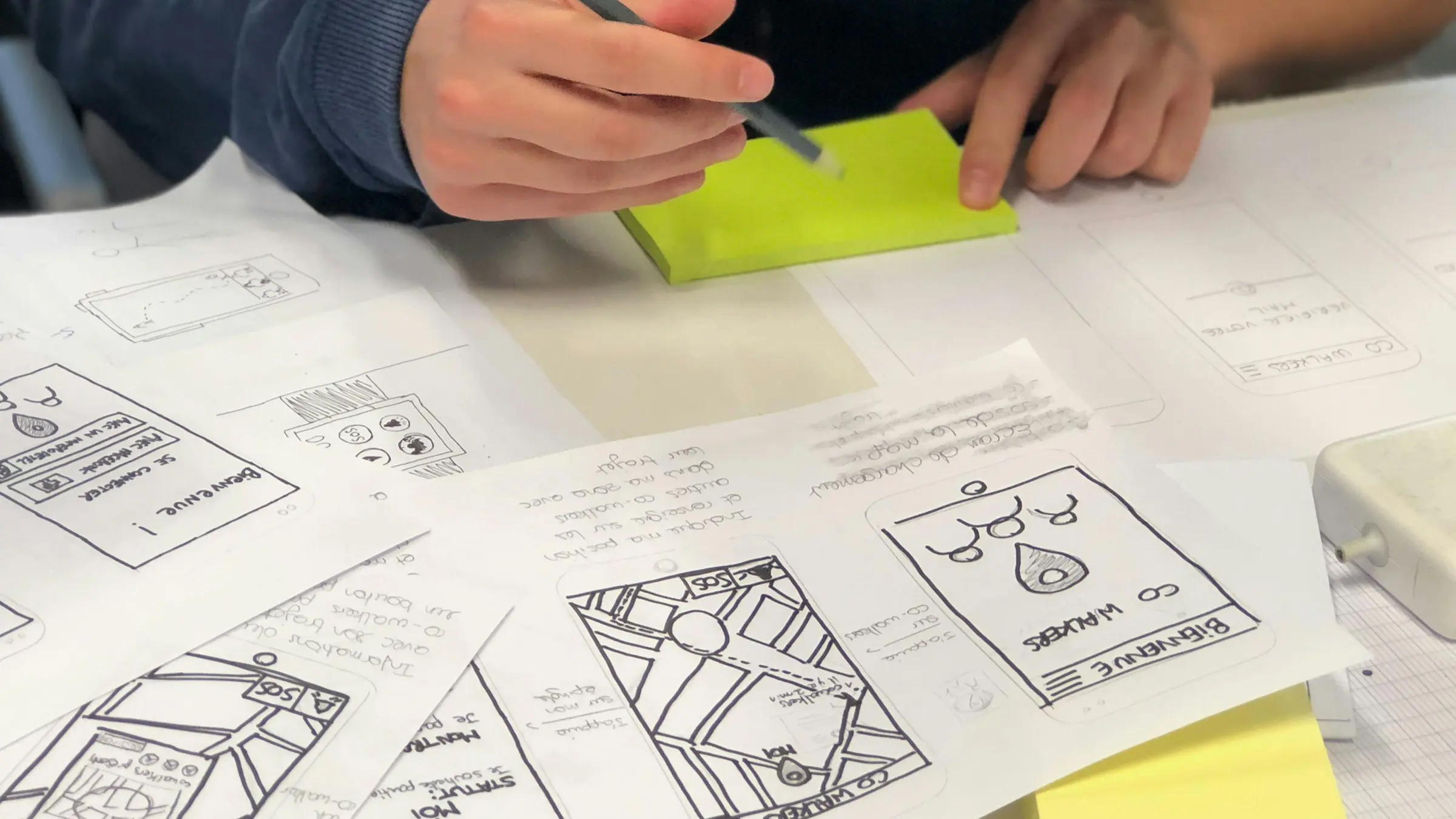
Designers map each user flow (sign up, the core action, payment, coming back) and then design the screens. Expect to review flows and key screens, and ideally click through a prototype on your phone before development locks them in.
Development is split into milestones, typically foundations (accounts, data, admin), the core feature, then payments, notifications and integrations. Each milestone should end with a working build you can test. We bill per milestone, and you never pay for one you haven't approved.
Testing runs throughout, but before launch it focuses on real devices, edge cases (bad connections, failed payments, empty states) and security. A short beta with real users catches usability problems that internal testing misses.
Launch covers app store listings and submission, production infrastructure, analytics and monitoring. Plan for app store review time, and have the team on hand for the first days after release.
Real usage reveals what to fix and what to build next. Every Synaptix build includes 30 days of post-launch fixes and is backed by a 30-day money-back guarantee: if you don't like the product within 30 days after launch, you get all your money back. Optional monthly support continues after that.
| Stage | You receive | You approve |
|---|---|---|
| Discovery | Validated problem, priorities | What the MVP is for |
| Scoping | Feature scope, architecture, price, timeline, risks | The build plan and price |
| Design | Flows, screens, prototype | How it looks and works |
| Development | A working build per milestone | Each milestone before paying |
| Testing | Test builds, bug list, beta feedback | Launch readiness |
| Launch | Live app, store listings, analytics | Go-live |
| Support | Fixes, updates, usage insights | What to build next |
Pure waterfall (plan everything, then build everything) breaks when you learn something mid-project. Pure agile with no fixed scope leaves founders with an open-ended bill. Most founder projects do best with a fixed scope and price for the MVP, delivered in short milestones with working software at each one, and flexibility saved for version two once real users have weighed in.
Decisions you'll make along the way:
For a scoped founder MVP, discovery and scoping take one to two weeks (our Blueprint takes 7 business days), and design, development and testing usually fit into 4 to 8 weeks. Larger products take longer and should be split into phases, each running through the same stages.
Discovery, scoping and architecture, design, development, testing, launch, and post-launch support. Each should end with something you can review and approve.
Most involved during discovery and scoping, then for milestone reviews and testing. A good team keeps your time focused on decisions, not technical detail.
The stages are the same. Mobile adds app store submission and real-device testing across iOS and Android.
Want to see what stage 2 looks like for your idea? Our $299 Blueprint gives you the scope, fixed price and timeline in 7 business days.
See the Blueprint


Book a free 30-minute call to talk through your project. No cost, no sales pitch, just an honest look at how Synaptix can build it.